
Your Google Business Profile matters more than your logo
For most local shops, the listing on the map is the single highest-return thing they own. Here is what to fill in, in what order, and why.
Blog
Plain-language guides on branding, social media, websites and local search — written for people who run a business, not for people who run a marketing department.
Latest writing
Each guide is written to be read in one sitting and acted on the same week. No jargon, no twelve-step frameworks.
For most local shops, the listing on the map is the single highest-return thing they own. Here is what to fill in, in what order, and why.
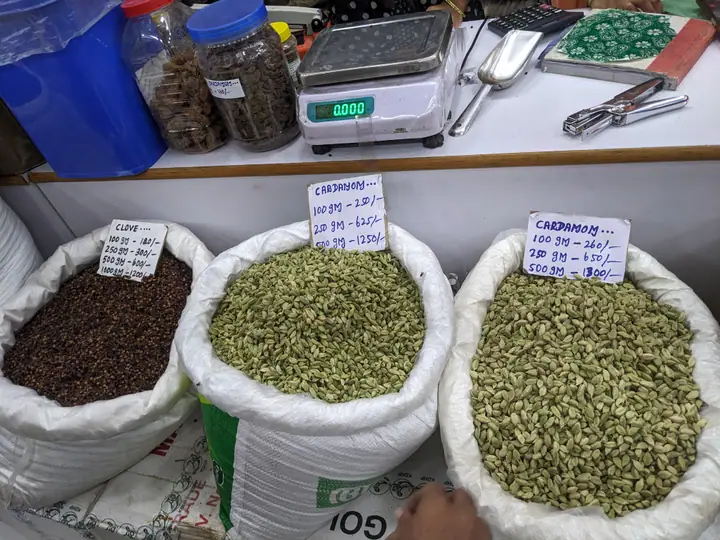
You do not need a camera, a studio or a photographer. You need light, a clean surface and six repeatable shots. A practical checklist.

Likes are cheap and quiet. Replies are the start of a conversation. A simple structure for captions that invites the right people in.

Not a feature list. Five things that decide whether a visitor calls you, messages you, or quietly closes the tab.
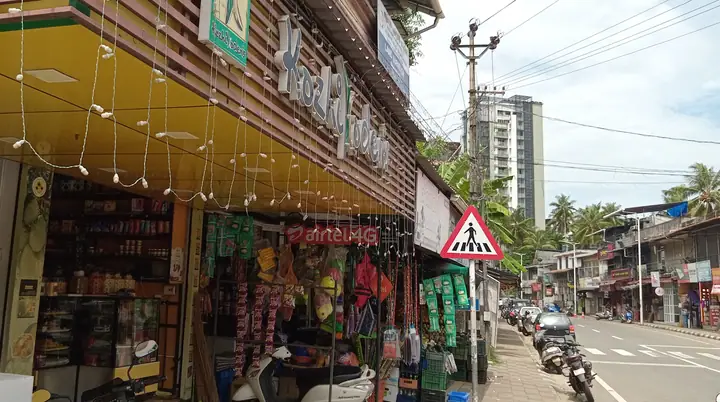
What you are actually paying for, why quotes differ so much, and the four questions that reveal most of the difference.
Local SEO
If your business has a physical location and serves customers in an area, the free listing on Google Maps is the single most valuable digital asset you own. It is free, it appears above paid results, and it is what most people mean when they say "I found it on Google".
A logo builds recognition over years. A complete, correct Google Business Profile can start bringing calls this week. When a person searches "tea shop near me" or "bakery in Kozhikode", the map pack appears before ordinary results, and most people never scroll past it. Your business does not need to be the first name in the world — it needs to be in that short list for the searches that matter.
Reviews are the second biggest lever after photos. The practical way to get them is to ask at the moment of a good experience — a regular customer who is happy, right after a good purchase. Put a small sign at the counter with a QR code to your listing, and say the words out loud. Most people will never volunteer a review; almost none will refuse a direct ask.
Then reply to every one of them, including the critical ones. A calm, specific reply to a bad review does two things: it reassures the next reader, and it shows the reviewer that someone is actually in charge.
Update the listing when something changes — new hours, a new product, a renamed shop. Post photos a few times a month. It takes twenty minutes and it is the cheapest marketing work available. If you want help deciding what to prioritise, ask us and we will tell you honestly whether this is where your next hour should go.
Content
Professional-looking content is not about having better equipment. It is about repeating the same six shots, in the same good light, with the same framing — every single time.
Nearly every bad product photo in the world is a lighting problem. Find a window, put the product beside it rather than in front of it, and turn off the ceiling light. Soft light from one side, no harsh shadows, no second light source fighting the first. If you only take one tip from this article, take that one.
Clean the lens — it is the single most common cause of a soft photo. Turn off the flash. Tap the screen on the product so the camera focuses where you want. Avoid the digital zoom; move closer instead. If your phone has a portrait or "food" mode, use it for a soft background, but switch it off for anything where the shape of the product needs to read accurately.
Photograph one thing properly every day rather than forty things badly once a month. Save them into a single album named after the business. When you need content, the library is already there and you are choosing from good material instead of scrapping around with whatever the camera roll happens to contain.
A repeatable set of shots, taken consistently, will do more for a small business's feed than any amount of filter. If you want templates that work with these photos, we can build a set for you.
Social media
A like is a reflex. A reply is a decision. If you want a post to start a conversation rather than fade into a feed, the difference is usually one question at the end of the caption.
They write a caption that describes the image. The image already says it. So the caption adds nothing and the reader has no reason to type anything. A caption that describes what the reader should do with the post is far more likely to get an answer.
Write the caption in the language your customers actually use, in the order they use it. If that is Malayalam, write in Malayalam. If it is the Malayalam-English mix people type in comments, write in that. A perfectly grammatical English caption from a shop whose customers read Malayalam is a caption for nobody.
Every comment you answer makes the next person more likely to comment — the thread looks alive, and people join conversations that are already happening. A short reply, a name, an emoji used sparingly and only where it fits your brand: that is enough. What is not enough is silence. A post with twelve comments and no replies from the business looks abandoned, and the next customer decides not to bother asking.
One more thing worth doing: write down the questions people ask you in the shop. Those are your best content ideas, your best website FAQ, and your best advert angles — all of them, for free, from people who are already interested in buying.
Websites
A business website does not need to be large. It needs five things, done properly, and a person who can load it on a phone with one bar of signal.
What do you do, where do you do it, and how do I contact you? A visitor should be able to answer all three without scrolling. Most small-business sites bury the answer under a slow-loading animation and a paragraph of history.
A phone number that is a tap-to-call link, a WhatsApp button, and a short form. Put them where a visitor expects them — in the header area, at the end of every section, and in the footer. If it is buried, most people will not find it, and they will simply try the next result.
More than half of the traffic to a local business site arrives on a phone, often on mobile data. That means images sized for the screen they appear on, and a page that does not wait for a large script to download before showing anything. A fast site is not a technical luxury — it is most of the search ranking advantage you can get for free.
A stock image of a smiling team in a modern office tells a Kerala customer nothing. A photograph of your shop, your counter and the product itself tells them everything: that you are real, that you are local, and that you are open. It also does more for trust than any paragraph of copy you can write.
An embedded map, the full address, and clear directions. A surprising share of local customers check where you are on the map before they travel, even for a business two streets away.
A visitor does not need an animation, a slider, a chatbot, a 40-page menu of services or a customer testimonials carousel with stock faces. None of those make anyone call you. What makes them call you is clarity, speed and trust — so spend the effort there.
Branding
Branding quotes vary wildly, and it is genuinely difficult to tell from the outside whether a high number is fair or padded. A few things help.
A logo on its own is one deliverable. A brand identity is a system: the mark, the supporting marks, the colour palette with defined roles, the type pairing, the rules for using them, and the templates that make it usable. Two quotes can differ by a factor of five and both be reasonable, because one includes the system and the other includes only the first step.
So compare quotes on scope, not on total. Ask each person for a list of what you receive, in a format you can lay side by side. If one quote cannot answer that question clearly, that tells you something useful.
A price that is dramatically lower than every other quote is not automatically a bargain — it is often a template, a logo mill, or work that stops after the mark itself. Equally, a quote that avoids a written scope is not a bargain at all; it is a quote for something undefined. Ask for a scope in writing, and read it.
If a business has no brand, no content and no website, doing all three at once is rarely the right first step — but doing only the cheapest piece can be worse, because you end up with a nice logo on a site that still does not work. The usual pattern is to fund the foundation properly: the identity, a small number of real content templates, and a simple site that converts. Then build on it as the business can afford to.
Whatever you decide, we are happy to look at quotes with you and explain what is included and what is not. There is no charge for that conversation, and if we are not the right fit we will tell you so.
Let's begin
Send us what you are stuck on. We will answer plainly, and tell you if it is a five-minute fix or something worth doing properly.